SpaceX catches Starship's upper stage for the first time
SpaceX has caught the top part of its Starship rocket with mechanical arms at its Texas launch site, though the booster catch was called off a day earlier.
This story was written with AI assistance and reviewed and published by an editor.
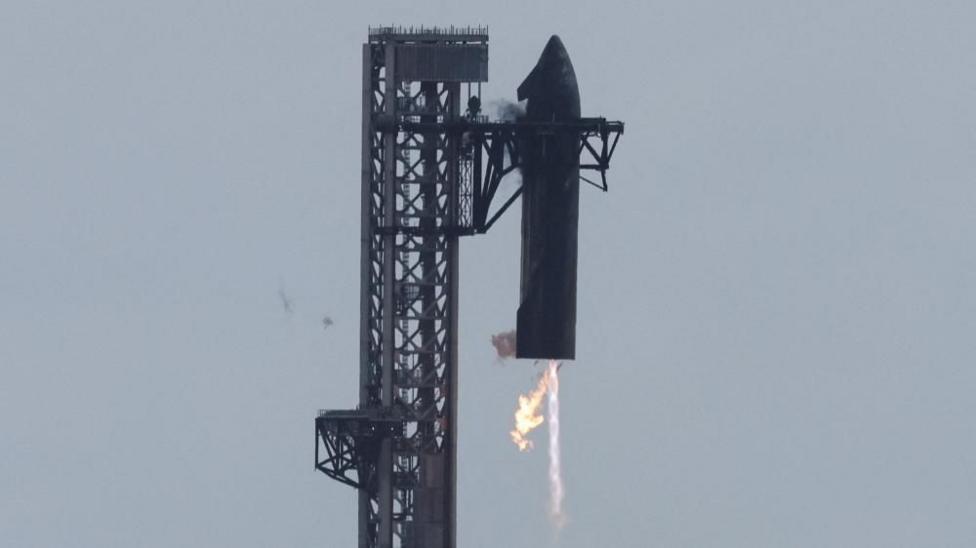
SpaceX has for the first time caught the upper part of its Starship rocket as it came back from space, a milestone and a major step in its plan to reuse the huge vehicle.
The upper stage, known as the Ship, came back to the launch site in Texas a few minutes later than planned on Saturday afternoon local time and was grabbed out of the air by the launch tower's mechanical arms. Crowds at the site cheered, and a commentator could be heard asking whether viewers could believe what they had just seen.
How the catch works
Rather than landing on legs, Starship is designed to return to the tower and be held by two large arms that SpaceX engineers have nicknamed chopsticks. The idea is to avoid the weight of landing gear and to let the rocket be inspected, refuelled and flown again quickly. Catching a vehicle this size is a delicate task, because it has to arrive at the right place with very little room for error.
A setback the day before
SpaceX had wanted to catch the booster and the Ship in one test. That did not happen with the first stage. After launch on Friday, the attempt to catch the booster was abandoned a few minutes into the flight, and the booster was sent towards the ocean instead, where it burst into flames just above the water. So the test delivered one success and one miss.
Why it matters
Reusability is central to SpaceX's plan to bring down the cost of reaching space. If both stages can be caught and flown again, the company argues that launches could become far cheaper and more frequent. Starship is also meant to support future missions to the Moon and, later, to Mars, so every step that proves the design is closely watched by space agencies and investors.
What happens next
The next goal is to catch both stages in a single flight. SpaceX will study data from this test to understand why the booster attempt was stopped, and regulators will expect to review any incident before further launches. It is worth noting that each test is an experiment, and the company has had failures as well as successes on its way to this point [VERIFY].
More from The Rabbit Post
For other technology news, see how Microsoft restored services after a global outage and why Nvidia shares tumbled as the Huang scandal widened.
Frequently asked questions
What did SpaceX catch?
It caught the upper stage of Starship, known as the Ship, using mechanical arms on its launch tower in Texas.
Was the booster caught too?
No. The booster catch was abandoned after launch on Friday and the booster came down in the ocean.
Why is catching the rocket important?
It supports reuse, which SpaceX says can sharply lower the cost of launches and support future Moon and Mars missions.